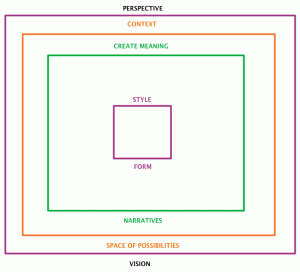

In response to the comments I received on the series Putting into play, I have produced a set of patterns showing the hands-on structuring of narrative and cognitive elements. Additionally, it keeps my time restraints from holding back curiosity.
In response to the comments I received on the series Putting into play, I have produced a set of patterns showing the hands-on structuring of narrative and cognitive elements. Additionally, it keeps my time restraints from holding back curiosity.


The Hidden Art of Pacing is a three-part trip, which takes you on a journey to trace the core to the hidden art of pacing by stripping familiar story and game structures from standard elements to discern the engaging and motivating forces that trigger the receiver´s building of experiences, feelings, and expectations.
To enhance the reading experience, I suggest you start with the first part if you haven´t done so already.
As a result of the stripping of the dramatic story structure, and the removal of its standard features (acts, turning-points, rising and falling actions), the previous part revealed a learning curve. The flow-state of the learning curve (illustrated below) shows the motivating engine by how the receiver gradually builds experiences and feelings on the path towards the goal.

The Hidden Art of Pacing is a three-part trip, which takes you on a journey to trace the core to the hidden art of pacing by stripping familiar story and game structures from standard elements to discern the engaging and motivating forces that trigger the receiver´s building of experiences, feelings, and expectations.
Before shifting to interactive media, I wrote story arcs for films and television series. The technique of scriptwriting was to follow your gut, establish a conflict, take it to a climax, and end it with a twist. The receiver’s engagement was built into the dramatic story structure, which meant that focus was laid on the character’s motivations, relations, and behavior. As long as the audience stayed seated and the ratings were good, work continued as usual.




“Putting into play” is part of more than a one-year-long project which goal is to explain from a cognitive and narrative perspective the mind and hands-on approach to the design of an engaging and dynamic game system. With help from cognition-based models, the focus is on the opportunity to explore how our thinking, learning, emotions work when setting out from scratch towards the desired goal.
To make the most of the post, I recommend reading Part 2 and 3 of the series Putting into play, which provides an orientation.


As the series is about how to ensure the quality of an experience from a narrative perspective beyond structures and templates, there are two recent structures that I haven´t mentioned yet that we will have to pass on to access the narrative from a cognitive perspective.


Based on a question on how to use the narrative in the testing of an experience I will explain what it means to have a cognitive approach to the narrative and how to approach a quality assurance from a narrative perspective beyond templates and strong structures.
 KATARINAGYLLENBÄCK
You must be logged in to post a comment.